Gaming for Education
Contact Me!
  • Home
  • About
  • Games in Education
    • Why Educational Tools Must Evolve
    • Defining a Game
    • How Games Facilitate Learning
    • Games in Traditional Education
    • Barriers to Implementation
    • Final Thoughts
    • Works Cited
  • Blog: Advice From a Gamer
  • News
  • Leaders and Innovators
    • Government Campaigns
    • Non-Profits
    • Universities and Schools
    • Teaching Communities
    • Miscellaneous Communities
  • Examples
  • Games Archive
  • Game Acronyms and Concepts
  • Contact

New Project: The Amoeba Sisters

8/29/2013

 
Hi everyone! I know it's been a long time since I've posted, but I promise my research is still very much alive. I do, however, have exciting news. My sister, a high school biology teacher, and I have collaborated on a really amusing project.

Let me introduce you to the Amoeba Sisters, two amoebas that are excited about biology! We are creating videos to demystify some of the more complicated science concepts by using real world examples in a funny context.

We could really use some help getting the word out, so below you will have a multitude of ways to be our friend! Thank you so much for your support!


Website: www.AmoebaSisters.weebly.com
YouTube Channel: www.youtube.com/user/AmoebaSisters
Facebook: www.facebook.com/AmoebaSisters
Twitter: www.twitter.com/AmoebaSisters


And now, please enjoy our latest video!

The So-Called "Fake Geek Girls"

1/19/2013

 
Picture
This morning, my friend informed about "fake geek girls." How has this become an actual concern? Imitation is the best form of flattery! I would welcome anyone that is interested in our "cultural" with arms wide open. Why on earth would you try to prevent people from enjoying what we enjoy? I’m very disappointed with our community. Who is arrogant enough to think they can judge who belongs in a community of hobbyists? What a ridiculous way to tear our community apart and take the enjoyment out of what we love.

I get it, we are worried about people taking over our cultural and destroying it, namely the sexism that has taken over most media. However, we already have that (see my previous post). And while we might not like it, teenagers “pretending” to be nerds will not hurt anything. If they are pretending, it’s probably just a phase that will fade out. If it’s not, they probably have some genuine interest in our cultural down deep. Our job is to nurture that interest and show them new things; show them that it’s more fun to actually play the game, read the book, or watch the anime than just pretend to like it.

We should embrace these people who think it’s cool to be us! Look at us! We have become the “cool” people. I myself find that just too amusing. Let’s be mature about it, and use this opportunity to broaden everyone’s perceptions. So, stop excluding and start embracing! There ARE no gatekeepers to our hobby. Come one, come all, stop by and play a game :)

In case you were not aware of “fake geek girls” like myself, I highly recommend this article: Serious props to that author. 

I also have a video for you to watch (see below) about sharing our cultural with others from (surprise) Extra Credits.

Finally, if you need some comic relief after my rant, please enjoy the comics from DorkTower and PennyArcade on the subject.

Advice From a Gamer: Time To Have That Female Talk...

1/1/2013

 
Picture
Well, the time has finally come. It's time to have that talk about female game characters. With ladies like Olivia Munn and Jessica Nigri, who sexualize games in every conceivable way, the gaming industry doesn't seem like a very female-friendly place. Or maybe it is, depending on who you talk to. Men love to see girls slut-up their favorite game characters, and they probably give you some fine attention if you do. But let's talk about what this is doing to women AND men.

Everyone knows that the target audience for most games is men. In most RPG games, you either play as a man or a super-sexy lady (Lara Croft, Bayonetta, Lollipop Chainsaw, Catwoman, Bloodrayne) in tight clothes. Sure, they might kick some butt, but the sex appeal is what really sells for those games. Ladies, until we bond together and start making our gameplay known, this is probably all we are going to get. And, men, you have a lot to gain from a female character transformation as well.

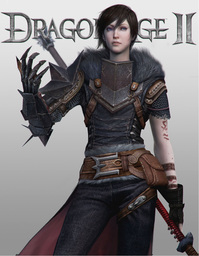
Games are much more compelling with diverse, complicated characters. I love to use Dragon Age as an example. You are given Leliana, Wynn, and Morrigan as female companions. Wynn, an elderly mage, adds age and wisdom to the game. Morrigan, an indifferent, witty, and independent, character, gives the story comic relief and fiery wit. Leliana, the kind and gentle soul who had a complicated past, offers your character her female compassion and tenderness. Yet you also have interesting male companions that do not follow set gender roles. You have the sensitive and tender Alistair, the flirty and rogue Zevran, and the stoic and aloof Sten. The diversity and complexity of these characters and their gender roles really make a game interesting.

What I'm trying to say is that we don't NEED perfect female characters - we need real ones. Just like Dove has campaigned for real woman, we need to games to support real woman. I'm not saying the game industry has to stop making beautiful women, but they need to make compelling ones. Give us a woman who struggles with herself and her problems like any human being does. We are all so different; use that diversity to make something that mirrors reality. It's so much more interesting and meaningful than watching a half-naked woman kick someone in the face...over and over and over again.

Also, just so I'm clear, I don't want male and female characters to be the same. Sure, some women have masculine qualities, but we are not men. Women tend to be more emotional, more empathetic, and more cautious...which might make us strong or weak, depending on the situation. Female and male characters should complement each other, not be exactly the same. Some women act like men, and some men like woman, show us that, too!

So, ladies, try not to be an Olivia Munn and Jessica Nigri, I know the attention might be appealing, but you're setting back the game industry from moving forward. Be an advocate for change! The best games are yet to come, and let's make sure that we, as women, are really reflected in them. Men, I know the gaming community has been a boy's club for a long time. Please try to share it with the incoming respectable women so that together we can make the gaming community a really interesting and diverse place to be!

For a really great video on the subject, watch the below video (props to Extra Credits!!):
http://www.penny-arcade.com/patv/episode/true-female-characters

Review:  20 Educational Games That Were Ahead of Their Time

9/21/2012

 
Ms. Kaitlin Cole contacted me the other day about OnlineUniversities.com’s article “20 Educational Games That Were Ahead of Their Time.” When I saw the list, I definitely could not resist doing a piece about these games. OnlineUniversities was dead on. Simcity, Where in the World is Carmen Sandiego, Lemmings? Those games are stuck in my mind like glue. Who knew that as little kids we were actually solving logic problems in Lemmings, or that we were learning Egyptian or Japanese history in Carmen Sandiego? It’s amazing the places a game can take you…just like a good book. I have vivid memories of exploring the Egyptian burial tombs in Carmen Sandiego or picking grapes while learning about Norse mythology. I remember building “Sarina-Land” in SimCity, trying to decide how high I could make taxes before my citizens ran me out of town.

Games bring back the fun in learning, too. Sure we could read about the Oregon Trail in a textbook, but the game Oregon Trail let you experience the hardships and challenges. Is learning always going to be fun? Of course not…sometimes you really do have to study boring tax laws out of a book. However, for children we need to install the fun in learning first. Learning is a natural, satisfying process. I believe that all kids want to learn, but that our system somehow takes away that innate love of discovery and curiosity (obviously, not on purpose). Games can help restore that curiosity without the risk of failure.

Many games today tend to stuff learning inside of a game rather than making the game ABOUT the learning. You can see that with so many math games where you “shoot” the right fraction or multiplication product. The best part about the games on this list is that you were learning as a side effect. The game didn’t rub the knowledge in your face; you learned it because the game was so engaging, and you wanted to know more! I didn’t come in SimCity wanting to learn economics and zoning laws, but you can bet I studied it passionately when I wanted to expand my city or build a giant zoo. 


Overall, I think this article did a very fine job of pointing out the older educational games that were right on target. While I haven’t fully investigated what is out there for kids today, I can’t say I have been impressed yet either. However, if you are interested in some great games that are out there developed by non-profits or universities, I definitely recommend checking out my paper or the game archive. Thanks for reading, and happy gaming!

Attention: This is Not a Game.

8/8/2012

 
CNN has created a great segment on games and society. I definitely recommend checking it out here. With that being said, I'd like to direct your attention to CNN's games and health section. 

The reason I like games is because they use _intrinsic_ motivators. To me, this is violating the whole principle. This is basically bribing a child with money and gifts. He said it himself, "It made me more interested in exercise because I got money." Games are wonderful because they give meaning...this is not meaning. A game should make you feel part of something bigger than yourself and make you want to collaborate and work hard simply for that good feeling. 

Look at games like Foldit, where gamers spent hundreds of hours folding proteins for scientists. Did they get cash? No. Did they win a gift? No. All they got was the fuzzy, warm feeling of collaborating with hundreds of other players and recognition when they succeeded. What this child is participating in is not a game in my view...it's just a glorified bribing system with buzz words like "points."  

Advice from a Gamer: Using Games as Family Activities

7/20/2012

 
Whether there is a gamer in your family or not, games can be excellent social activities. Nintendo’s Wii has created a whole new market based on social gameplay. Games like Wii Sports, Guitar Hero, and Mario Party have become extremely popular at parties and in the home. Still, some parents are wary about games in their household, especially if they have children that play games a little too much. I am here to tell parents why games can facilitate communication and bonding in families, especially if you have a child that is a gamer.


No one would think twice about the idea of playing a board game or card game as a family activity. However, games tend to get a bad reputation. They are often considered violent or mind-numbing by parents. While parents are a bit more open to games like Wii Sports or Brain Age, they are wary about other multi-player games like Halo or World of Warcraft. This is a perfectly healthy skepticism as the media loves to pick up stories about game addictions or game violence. The truth is that games don’t make children violent or addicted. That’s not to say that games can’t encourage a child with a predisposition to violence to become more violent or a child that has a void in their life to fill it with a game addiction. Game addictions are very real and dangerous, and I recommend checking out my other article if you suspect your child has an addiction. What I urge here is to look past the media hype. People play games for many different reasons and in many different ways. Games like Grand Theft Auto can be played in a violent manner by one child, but another child might use it to build and customize cars to drive around town. How your child plays a game and what they like about the game are crucial to understand. However, I’m getting off topic. How are games good social activities?

1.        Collaborative gameplay forces people to communicate and apply teamwork to become victorious. For example, if you and your son are teaming up against your husband and daughter in a game of Civilization, you will need to have a strategy and communicate your moves. If all four family members are playing Tales of Vesperia, you will have to synchronize your movements to take down the big bosses, which requires communication. Your family can even start a band in Rock Band that takes serious teamwork to appease the crowd. Even competitive games consist of silly trash-talk.

2.        Games create great bonding moments and enjoyable memories. Games can be very emotional and stirring experiences, just like a movie or book. Many games like BioShock or Deus Ex encourage the player to make very difficult decisions about their beliefs and philosophies. Other games, like Civilization, might just create great inside jokes and memories. “Hey mom, remember when we ransacked dad’s Aztec civilization with your Greek hoplites and my Ottoman janissaries and took his capital? We were awesome.”

3.        Not all games are played sitting down, and they can inspire everyone to get up and move. The Nintendo Wii has led the way for motion-sensitive gameplay, followed by the Xbox Kinect and the Playstation Move. Wii Sports, Zumba Fitness, Rock Band and Dance Dance Revolution encourage players to get off the couch and cooperate in a dance or compete in a boxing match. Much laughter is to be had when watching dad shake his booty or mom try to hit the high notes in Karaoke Revolution.

4.        Games can create common ground between parents and children and are a way to meet halfway. Parents might want to play a fun board game, and kids might want to play an interactive game. Why not do both and play an interactive board game like Mario Party? It’s a great way to get involved in the technology that kids are immersed in and understand the game world that many kids are living in today. It’s also a great time to teach kids healthy gaming habits!

There are dozens of games out there that area ideal for families. For those curious parents (or kids) I have included a list below of games that I have referenced in this article. As always, feel free to comment, give more game suggestions or ask questions. Please remember I am not a psychologist or a professional and that this all based on personal experience and my research in game-based learning at the Center for Excellence in Education. Happy gaming!

Referenced Games

1.        Civilization (PC)

This is one of my absolute favorites as it is both educational and social. Civilization is a turn-based strategy game (that is, it is not in real time) where players play as one of the famous civilizations, such as Alexander of Greece, Napoleon of France, Catherine of Russia, and Gandhi of India. Every player (this can be played solo or online with other players) begins with a single settler and raises their small, humble city to a complex, large civilization using technology, culture, economics, and military units. The player must balance all four to have a competitive, stable, and protected civilization, but they may choose to focus on one. There are several ways to win the game, whether by winning the space race (technology), taking over all the other civilizations (military), filling out five “culture trees” to develop the Utopia project (culture) or winning the most votes in the United Nations (diplomacy).

2.        Wii Sports (Wii)            

Players can bowl, box, golf, and play baseball or tennis. All of the sports can be played against the computer or another player. Tennis can be played with doubles, allowing for four people to play, and bowling can be played with several as well. Other similar Wii games include Wii Party, Wii Sports Resort, and Mario and Sonic at the Olympic Games.

3.        Mario Party (Wii)

This game is number 10 on the best-selling Wii games list and is a popular series. It is a competitive party game and functions as a sort of interactive board game. Four people can play at once, and players can navigate their characters on different amusing themed boards with the roll of a virtual dice. Players compete in fairly simple minigames to collect stars and win the game.

4.        Dance Dance Revolution (Playstation, Wii, Xbox, Gamecube, Dreamcast, Nintendo 64)

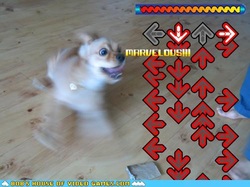
 In the game, arrows on the screen rise from the bottom up to the top of the screen. As they reach the top, the player must simultaneously hit the corresponding arrow with their foot on the gamepad (this game requires the purchase of the DDR gamepad). The arrows, therefore, lead the player in a dance with fun, upbeat songs. Points are awarded depending on how accurately the player hits the correct arrow in time with the screen. Players can play solo or with a friend either competitively or cooperatively.

5.        Karaoke Revolution (Playstation, Wii, Xbox, Gamecube)

This is a pretty straightforward game. Basically, the player is given the words to a song in a karaoke fashion, and the player must accurately hit the correct pitch using the feedback from the game. The game is very animated with an enthusiastic crowd that gets more excited as the player reaches the correct pitch. The game has both solo and multiplayer modes.

6.        Rock Band (Xbox, Playstation)

I will admit that Rock Band requires a bit of an investment. You will need the two guitar controllers, the drums, and the microphone. If you are looking for a cheaper option, you can look into Guitar Hero which only features the guitar controllers. However, Rock Band is an extremely fun game, and players naturally are drawn to one of the “instruments.” Each player must follow the colored “notes” on the screen and match them with the instrument in sync. Each player has their own set of notes and when they are all played together, it will play a song. If a player is doing poorly, the song will sound very off and the crowd will start to boo; therefore, teamwork is imperative. It’s pretty fun to watch the crowd roar while dad is shredding the guitar and mom is rocking out on the drums in perfect harmony.

7.        Tales of Vesperia (Xbox)


This is one of those “sitting down” kind of games. Parents may feel very out of their element with this type of game because it is a role-playing game, but I assure you I have had tons of fun playing this as a social game. Tales of Vesperia is a very cute Japanese role-playing game centered on Yuri, who is attempting to recover a “blastia” core for his city (in this fantasy world, ‘blastia’ is a technology that civilizations depend on to provide resources, such as water, and protection). The game begins as a two player game but eventually works up to four players as Yuri meets new characters. It is a very child-friendly storyline and not gruesome. For parents wary of manipulating a console controller, I assure you this was one of my first console games and I was extremely awkward. You will get the hang of it.

8.        Kingdom Hearts (Playstation)

I honestly have not played much of Kingdom Hearts, but I have tons of friends (and couples) who swear by this game so I thought I would include it. It’s also a nice alternative to Tales of Vesperia if you have a Playstation instead of an Xbox. This is a very popular multi-player series and is a bit similar in style to Tales of Vesperia. It’s fun for kids because it features many Disney and Square Enix characters. Players will meet Donald Duck and Goofy and battle Disney villains like Maleficient from Sleeping Beauty.

Advice from a Gamer: The Realities of Gamer Regret

7/19/2012

 
Picture
I have previously written two articles about game addictions – one for gamers and one for parents. Both of these articles were about identifying and addressing game addictions. However, today I’d like to talk to you about gamer regret. Jane McGonigal does an excellent job of discussing gamer regret, a term coined by Clive Thompson, in her book “Reality is Broken.” Almost every gamer has experienced gamer regret in their lives. It’s that feeling of, “Have I wasted my whole life on games?” Gamers start to worry they may be missing out on life despite how much they have enjoyed playing games with their friends. It doesn’t help that society and parents generally shout, “YES!!” to this question. Society generally disapproves of video games and has a poor perception of gamers. They usually think of the teenager furiously mashing buttons to Mortal Kombat while downing cans of Red Bull, rather than the gamer that enjoys a diversity of games from a complex strategy to an inspiring adventure in his free time. I have no doubt this is why gamers actively seek out other gamers to befriend.

If you are feeling gamer regret, the feeling might be justified. After all, there is more to life to video games. However, it is important to avoid being too hard on yourself. If you enjoy games, that is a perfectly fine hobby. Games have a lot to teach us about problem-solving, technology literacy, creativity, innovation, and scientific inquiry; after all, isn’t that what this site is all about? But just like anything else, everything should be done in moderation. If you are experiencing gamer regret, it might be time to reduce the gameplay a little bit, but that doesn’t mean those gaming skills should get stale. Put them to good use for society. Here are a few ways you can do that.

1.        Design your own game. There is a huge national movement right now for creating games for STEM (science, technology, engineering, and math) education. Chances are you have a thousand ideas for a game; why not make a game where you can teach something of real substance to someone? [http://www.stemchallenge.org/] If you have never programed before, try using a program like Gamemaker, Scratch, Gamestar, or Kodu. If you aren’t interested in education, how about games for social change? [http://www.gamesforchange.org/]

2.        Get involved in an alternate reality game. As a gamer, you are likely to have an impressive arsenal of skills like collaboration, system-thinking, information retrieval and organization, determination, and ingenuity. Put those skills to use in a social change game like Evoke or Sparked (see game archive). There is no better feeling about making the world a more educated and better place WHILE gaming.

3.        Have an idea about how your favorite game can change the world? Then get involved in an online community! Enjoy Minecraft? Check out how it’s changing schools and letting students tour the Taj Mahal or learn geography. [http://www.minecraftinschool.com/] Need one more turn in Civilization? Instead, look at how it’s being implemented in classrooms to revolutionize history. I recommend the book by Kurt Squire called “Games and Learning.”

4.        Find a game with real world meaning. If you loathe alternate reality games and find them cheesy, try finding a game that actually benefits society. Games like Foldit (see games archive) are actually improving science and technology and require no knowledge of biochemistry. Put those spatial orientation, logic, and creative gaming skills to work!

5.        Take your game interests outside the game. Has BioShock or Deus Ex left you pondering some different philosophies? Get researching! Post what you find in your gaming community or talk about it with your friends. Have you played Civilization and wondered about the life of the Ottoman janissaries? Maybe you have been intrigued by the jabber of The Sims and want to create your own language or learn a new one.

6.        Use your game to create art, stories, or movies. If you can’t part from your favorite game, consider using it in a different ways. Google how to create machinima and start using those information processing gamer skills to teach yourself. Create a movie or a play based around your family in The Sims. Join a fan-fiction community and start writing stories about your favorite Final Fantasy game characters. Try your hand at some digital art and draw up new weapons or worlds for Halo.  

There are dozens of ways to put your gaming skills to good use. Games are the most productive when you are using them in new, creative ways. Make a list of all the skills you have, particularly those that gaming has provided, and find out how to apply them. In my personal experience, this has been the best way to combat gamer regret. Gamer regret is usually an indicator that you might need to come up for air and reflect on your gameplay. Instead of wallowing in those “lost hours” figure out what you have taken from those hours and improve the world around you! Happy gaming!


Advice from a Gamer: Confessions of a Former Game Addict

7/18/2012

 
This article is meant to be a spin-off to my previous article, except directed at gamers who are actually addicted to games, think you might have an addiction, or are simply curious about game addictions. It has very similar elements but with more of my personal sentiments. Game addictions, after all, are very personal; they are embarrassing, frustrating, and sometimes confusing. They are started for many reasons – rebellion, loneliness, low self-esteem, boredom, etc. For many people, games are simply their way of enjoying themselves like reading a book or baking a cake, and they put in a lot of hours. Games become addictions when they become detrimental and interfere with your real life. When I was in high school, I played EverQuest religiously. As soon as my backpack hit the floor of my room, I was on that game until at least 11pm at night. I had just moved from Lubbock, Texas to Houston in the middle of high school. Classmates had already formed cliques, and the private school I went to was intimidating. My classmates were not gamers. They did not watch anime or read fantasy books like I did. I didn’t really find anyone with my interests or hobbies except for those that were a bit segregated. I eventually settled in with an odd group of people who weren’t exactly a perfect match but tolerated my interests. I turned to games for the friendship and self-esteem that was missing in my life. EverQuest players shared all my same interests and were extremely accepting and friendly. 

As I developed my game character, I found that I was good at the game. The traditional lectures in school did not keep my interest or challenge me. In EverQuest, I was able to make powerful character builds and optimize my healing or dps and so I became an asset to the guild. I created crafting and skill spreadsheets and thought about ways to enhance my leveling efficiency during class. Soon, I had established friendship and recognition in the game, but in the real world, I did not have those things. I was spending 5 hours on the game every day like a part time job. 

When people think of game addictions, they often think of the South Park World of Warcraft episode where all the kids were sitting in the basement, getting fat, eating Cheetos, and living at the computer while their life wastes away. While that is definitely an indicator of a game addiction, sometimes they can be much more difficult to detect. In my case, I was able to keep my grades high, eat lunch with friends, and also participate in track which kept me healthy. However, underneath it all, I was apathetic with my real life. Classes were too easy and boring, and EverQuest challenged me in new, interactive, and fulfilling ways. My friendships were mostly shallow, and EverQuest encouraged me to work with strangers in challenging, collaborative ways, making me feel more bonded to my online guild members. I hated track with a passion, but it kept my mother satisfied and unsuspecting of my game addiction. I was living a mechanical life while letting my imagination and passion unfold into the game. I was just going through the motions of life, and everywhere I went my mind was on the game. Life was slipping out of my fingers because the game gave me everything I needed, and real life kept trying to take it away from me. I developed an irritation with everyone who tried to pull me away from my game. I was flaky with social events and doing only the bare minimum in real life that would allow me to keep up my game grinding. Everything that I encountered in life – trips, extra homework, school events – were evaluated and judged on how they would affect my gameplay. Basically, I was kind of a jerk in my real life, while my Erudite cleric was kind, generous and friendly.

To those of you with addictions, if you haven’t read Jane McGonigal’s book “Reality is Broken,” I definitely recommend it. She explains why games seem to be so much better than real life because they give validation, immediate feedback, intrinsic rewards, and meaning. Life is full of delayed gratification and sometimes seems to lack meaning to some greater purpose, and games make you feel like you are contributing to something greater than yourself. However, you are missing out on the fun and essence of life, I promise you. I missed out on extracurricular activities and other interesting things I could have learned. I never found my niche in life until my senior year of college. To know that I could have probably found it in high school is very disheartening. Gaming wasn’t so much a life destroyer as a giant time-suck in my case. Life is too short for a game addiction.

If you feel like your parents don’t understand, ask your friends or even your guild for help. Your guild might understand more than you think. Here are a few other suggestions: 

1.        Set goals for yourself and make a game out of it. Try bringing your avatar to the real world; get as many skill points in school and character attributes with friends as you can. Real life IS the epic boss battle, and you’re going to need them! It’s never too late to change your life around. 

2.        Seek out multiplayer alternate reality games that are fulfilling like Sparked or Evoke that give you that “game fix” while also letting you work with people. As a gamer, you have incredible collaborative skills to offer the community – put them to good use on things that will give you warm fuzzy feelings and better the world around you. Find a way to direct your powerful gaming energy into something even greater than the game. Look into things Foldit for inspiration.

3.        If you have other friends that are addicted, make a support network. Promise each other you will all only play together for a certain amount of time. Be honest and open with your struggle. 

4.        Consider using self-help games like SuperBetter. This is a superhero-themed game that turns getting better into a multi-player adventure. It’s designed for anyone recovering from an injury or coping with a chronic condition to heal with more fun and less misery. Pick your identity and choose your superpowers. Identify the “bad guys” as those things that make you feel worse and need to be destroyed (the game or things that make you want to play the game). As you progress, you unlock achievements.

5.        Have a serious conversation with your parents. If you don’t know what to say to them, try printing out my article that is designated for parents about game addictions. Invite them to play the game or try writing about how you feel and what the game makes you feel. Tell them you need their help but also need them to be understanding of what you are going through. Recruit them to your “recovery raid” and start battling that addiction boss!

6.        Find a new game that is not as immersive. Puzzle games, like Braid or Portal, are short and sweet. They are challenging but fun and fulfilling. This actually worked really well for me (see below) but be sure careful not to develop a new addiction! Keep the overall goal of reducing gameplay in mind. 

Sometimes it takes something big to pull someone out of a game addiction. In my case, it was getting a different game. After looking at my logged hours my senior year of high school, I realized that this would probably not do well for me in college. Instead of attempting to go cold turkey, I switched over to Guild Wars which has a smaller game world than EverQuest. I was able to do a mission with some people for an hour or two and then move on to something else. It was extremely hard to leave those friendships with my guild members. However, I was determined, and it made my senior year of high school a bit of a nightmare trying to stay away from EverQuest. I actually ended up writing a lot of stories that year about EverQuest, and I found this very helpful. Somehow, reflecting on those adventures with my guild members produced those nostalgic feelings that were pleasant without being consuming. I realized at that moment that I could use games to help me in real life. I became excited as I put my EverQuest skills to work for me in real life. I made scripts, stories, and art around my fantasy world. I organized my school work in the spreadsheets once designated for EverQuest, and I participated in fanfiction sites where I could share what I made. But don’t wait around for that moment. There are too many fantastic games, too many awesome people to meet, too many cool things to learn and too many beautiful places to go for you to be sucked into a single game for hours a day. Diversify your life and challenge yourself. You obviously succeed in one game, why not try something else a little more challenging? I challenge you today to do battle with your demons, level up in determination, and seek out the princess in another castle.

Want to share? Comment below and share your experience! As always, please remember that I am not a psychologist and am not qualified to give professional advice. However, you are always welcome to send me e-mails to simply chat or ask questions about my experience.

Advice from a Gamer: How to Approach Your Child’s Game Addiction

7/15/2012

 
Before I delve into this subject, I would like to apologize for its length. I wanted to keep this article short, but since it is such a personal story, I couldn’t help myself. As a disclaimer, please remember everything in this article is based off of my personal experience. I am not a psychologist or a professional. I am just a graduate student researching game-based learning at the Center for Excellence in Education. However, I like to pretend that my hundreds of hours of gaming and personal experience make me credible for this kind of advice.

As someone who had a game addiction in high school, I want to reach out to those of you know someone who is addicted to a game, particularly parents. I love games and am still an avid gamer, but I will clearly state that game addictions are very real. Adults and children alike put thousands of hours into games like World of Warcraft or Halo while ignoring their real lives. When non-gamers look at these children and adults, they tend to blame the game. They don’t look at the individual to see what voids these games are filling. They don’t look at what is missing in this person’s life like friendship, self-esteem, challenge, or acceptance. Games become addicting when they fill one of these voids just like television, drugs, or eating disorders. However, games can actually be very useful learning tools, provide great challenges, or offer stress relief, so I want to emphasize that games should not be demonized. The truth is that the problem is much deeper.


Now there is a fine distinction between a gamer and a game addiction. For many people, games are simply their way of enjoying themselves like reading a book or baking a cake, and they put in a lot of hours. Games become addictions when they become detrimental and interfere with your real life. When I was in high school, I played EverQuest religiously. EverQuest is similar to World of Warcraft in that it is an MMO (massive multiplayer online) game. That is, many people all over the world log on to the game and play together. As soon as my backpack hit the floor of my room, I was on that game until at least 11pm at night. I had just moved from Lubbock, Texas to Houston in the middle of high school. Classmates had already formed cliques, and the private school I went to was intimidating. My classmates were not gamers. They did not watch anime or read fantasy books like I did. I didn’t really find anyone with my interests or hobbies except for those that were a bit segregated. I eventually settled in with an odd group of people who weren’t exactly a perfect match but tolerated my interests. I turned to games for the friendship and self-esteem that was missing in my life. EverQuest players shared all my same interests and were extremely accepting and friendly. 


As I developed my game character, I found that I was good at the game. The traditional lectures in school did not keep my interest or challenge me. In EverQuest, I was able to make powerful character builds (specific combinations of skills and attributes) and optimize my dps (damage per second) and so I became an asset to the guild. I created crafting and skill spreadsheets and thought about ways to enhance my leveling efficiency during classes. Soon, I had established friendship and recognition in the game, but in the real world, I did not have those things. I was spending 5 hours on the game every day like a part time job. 


Let me assure you that my parents were very good (but busy) parents. They did everything they could to keep me off EverQuest. They hid my game, they set a timer by the computer, they grounded me from the computer, they forced me to take a sport, they put the computer in the study where they could monitor…they did pretty much everything they could think of. They even asked me for ideas about how to keep myself off the computer. However, I always found a way around the restrictions even if it meant I had to wake up at 3am in the morning to play while they slept. My parents couldn’t keep tabs on me at all times and trusted me to act like a responsible adult (which I didn’t). I don’t know what they could have done to keep me off the computer, honestly. I was determined to get my fix. Therefore, I want to take another approach for parents who are exasperated like my parents probably were.

1.       I think what would have helped the most was talking about the game. If my parents would sit down to watch me play or ask me about the game, I would have been thrilled. The game was another life to me, and I wanted to talk about it. I wanted to show off the complex charts and spreadsheets I had made. I still to this day have vivid memories of running around forests, watching the sun set from the highest point I could climb, or teaming up with a dozen people to take down large creatures. I was bonding with human beings thousands of miles away. Parents, even if it seems silly or unhealthy to you, please get involved. You are so special to your child, and your interest could make a world of difference.

2.       Try the game. Look at the game through their eyes and see what they are experiencing. You don’t have to be good at it; in fact, your child may really enjoy protecting you and showing you the ropes. Once you have entered their world, you can speak their lingo and they will be more inclined to hear you out. You may be surprised to find your child is very popular in their gaming community. Make a contract with your child that he or she can only play when you are playing with them. You need to experience the game before you demonize it. It’s very true that some games are violent and may be inappropriate for your child’s age. However, when you criticize the game, you are criticizing the place your child feels respected and accepted. He or she will be defensive if you constantly attack that second life. Find out what is missing in their life by watching them play and listening to them and then go from there.

3.       Watch how they play. Games like Grand Theft Auto often get a bad reputation as a violent and sadistic game, but I know several people who simply like to build and customize cars on Grand Theft Auto and then drive around town. Ask them questions when they make decisions in the game to understand what they are getting out of the game.

4.       If your child is willing to give up their addiction but is struggling, help them. Try giving up something with them together even it isn’t a game. You can make it a cooperative effort or a competition.

5.       Help them find new interests or try weaning them off MMOs with shorter, less immersive games. You can make gameplay a social activity with your child. I have a fun article about using games as family activities on my website. Short puzzle games like Portal or Braid are fun, challenging, and fulfilling. I have spent many hours watching my boyfriend play puzzle games while joking, advising, and talking with him.

Sometimes it takes something big to pull someone out of a game addiction. In my case, it was getting a different game. After looking at my logged hours my senior year of high school, I realized that this would probably not do well for me in college. Instead of attempting to go cold turkey, I switched over to Guild Wars which has a smaller game world than EverQuest. I was able to do a mission with some people for an hour or two and then move on to something else. It was extremely hard to leave those friendships with my guild members. However, I was determined, and it made my senior year of high school a bit of a nightmare trying to stay away from EverQuest. I actually ended up writing a lot of stories that year about EverQuest, and I found this very helpful. Somehow, reflecting on those adventures with my guild members produced those nostalgic feelings that were pleasant without being consuming. I realized at that moment that I could use games to help me in real life. I became excited as I put my EverQuest skills to work for me in real life. I made scripts, stories, and art around my fantasy world. I organized my school work in the spreadsheets once designated for EverQuest, and I participated in fanfiction sites where I could share what I made.

When people think of game addictions, they often think of kids sitting in the basement, getting fat, eating Cheetos, and living at the computer while their life wastes away. While that is definitely an indicator of a game addiction, sometimes they can be much more difficult to detect. In my case, I was able to keep my grades high, eat lunch with friends, and also participate in track which kept me healthy. However, underneath it all, I was apathetic with my real life. Classes were too easy and boring, and EverQuest challenged me in new, interactive, and fulfilling ways. My friendships were mostly shallow, and EverQuest encouraged me to work with strangers in challenging, collaborative ways, making me feel more bonded to my online guild members. I hated track with a passion, but it kept my mother satisfied and unsuspecting of my game addiction. I was living a mechanical life while letting my imagination and passion unfold into the game. I was just going through the motions of life, and everywhere I went my mind was on the game. Life was slipping out of my fingers because the game gave me everything I needed, and real life kept trying to take it away from me. I developed an irritation with everyone who tried to pull me away from my game. I was flaky with social events and doing only the bare minimum in real life that would allow me to keep up my gameplay. Everything that I encountered in life – trips, extra homework, school events – were evaluated and judged on how they would affect my gameplay.

Parents, your children are experiencing vivid, immersive adventures every time they load a game. Games have so much to offer as far as problem-solving skills, scientific inquiry, and technology literacy, but they are still media. If your child’s personality drastically changes while he or she plays the game, you might want to look into why. I would recommend that you do not react to the situation with hostility but curiosity until you know for sure it is an addiction. Look beneath the game to what void that game is filling. If you don’t know how to begin a conversation with your child, try directing them to my site. They can read the spin-off of this article that directly addresses them. Ask them what they think of my experience and if they have ever struggled like that before. Ask if they know anyone with a game addiction and what advice they would give that person. If you think your child has a serious addiction please seek professional help, but I will be happy to answer e-mails with my own personal experiences. Please remember, however, that I am not a psychologist and am not qualified to give professional advice.

Hello World!

7/13/2012

 
Just a traditional "hello world" to kick off this blog. Who would have thought advice from a gamer would ever be a thing? Yet here I am to take on everything from games in the classroom, to gamer regret, to game addictions. I would greatly appreciate topic ideas, guest authors, and other fun ideas! Happy gaming!

    Author

    Sarina Peterson (Sarina Rapini) is a graduate student in public policy analysis with an education policy concentration at Texas A&M University. She graduated from Texas A&M with her bachelors in economics.

    Sarina recognizes games as valuable tools for problem solving, scientific inquiry, creativity, and technology literacy. However, as a gamer herself, she also understands the drawbacks and is very cautious about implementing them in the classroom. She believes that games can transform education into an interactive, significant experience, particularly in informal education.

    Archives

    August 2013
    January 2013
    September 2012
    August 2012
    July 2012

    Categories

    All
    Game Addictions
    Gamer Regret
    Games And Family
    Social Games

    RSS Feed

Powered by Create your own unique website with customizable templates.